
AI for In-House Legal Teams: Risks of Operating Without Structure
This is the first post in a three-part blog series on how in-house legal teams can use AI safely and effectively across their legal workflows. Across the series we will cover:
Part 1: Risks of Operating Without Structure: The hidden dangers of using AI on unstructured data and why a strong foundation is essential.
Part 2: Building the Foundation: How structured contract and matter management can turn AI from a risk into a trusted assistant.
Part 3: Unlocking AI Value: How AI can automate tasks, surface insights and support strategic decisions once a solid foundation is in place.
In this post, we explore why overlooking the foundational layer can turn AI from a helpful tool into a risk, and why structure and governance are key to its success
The Promise and Pitfalls of AI in Legal Work
AI has huge potential to improve legal operations. Consider an in-house legal team working on a large volume of matters: managing litigation, regulatory reviews, compliance investigations and commercial negotiations. AI can highlight risks, surface insights and guide decision-making, freeing up lawyers to focus on higher value work rather than time-consuming administrative tasks.
Recognising this potential, teams often move quickly to put AI to work, supplying it with a large volume of matters, notes and documents scattered across shared drives, email inboxes and individual folders. While well-intentioned, this approach can cause hidden issues that eventually affect both results and the team's trust in the system.
Without structure, AI outputs can be unpredictable. For example, sensitive details could appear in reports shared with the wrong people, or AI might prioritise a low-risk advisory matter before a time-sensitive regulatory investigation simply because it lacks the context to distinguish between them. Legal teams then spend extra time reviewing and second-guessing AI suggestions, slowing adoption and gradually reducing confidence in the tool.
What begins as an efficiency initiative can quickly start to feel like an additional layer of work rather than a solution to existing pressures. The issue is not AI itself but the absence of a centralised and structured approach to managing matters. Getting that foundation right is what separates teams that struggle with AI from those that use it effectively.
Risks of Using AI Without Foundations
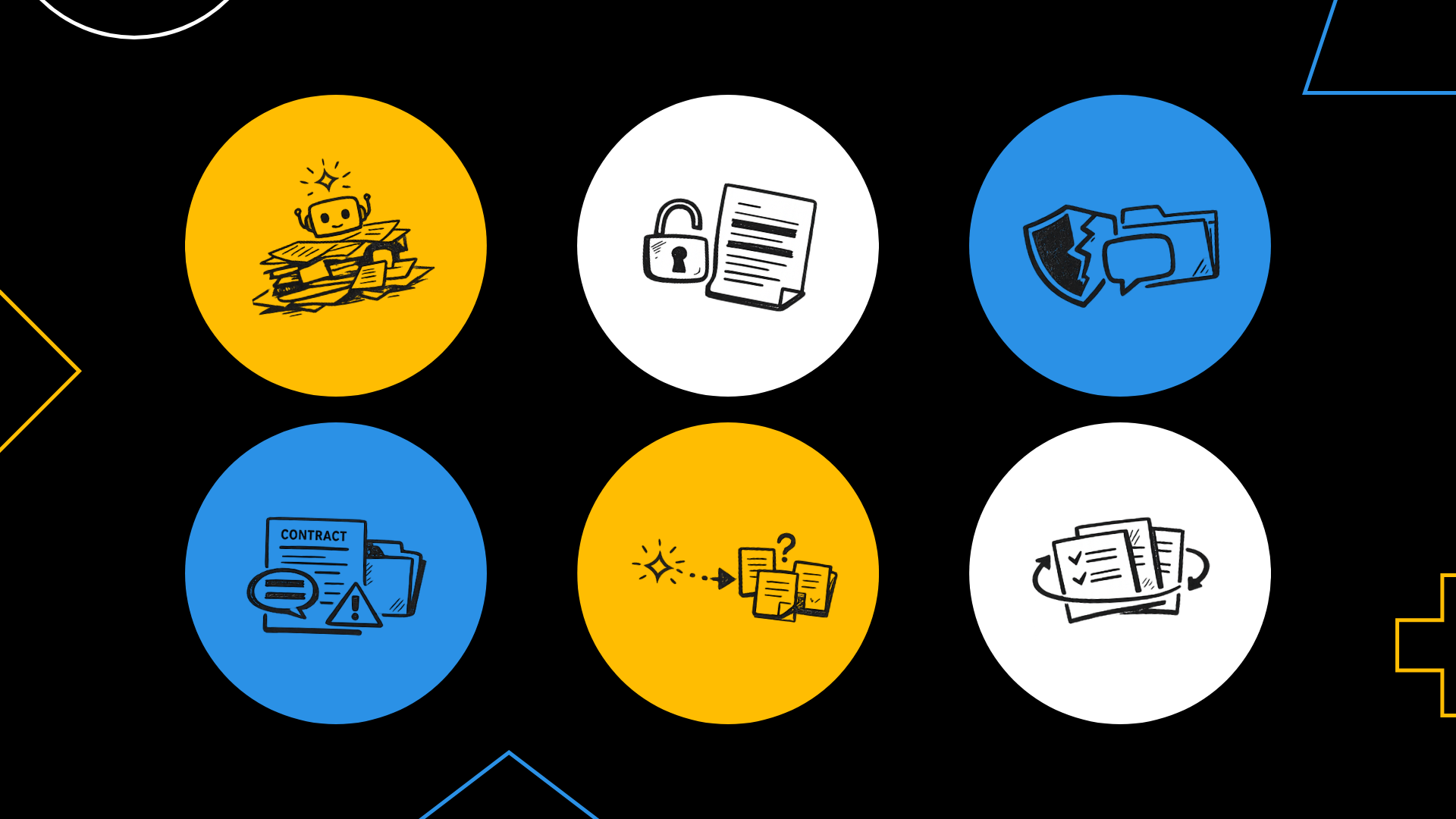
As in-house legal teams begin to adopt AI tools, it is important to recognise that the technology relies heavily on the quality and structure of the information it processes. Without a strong foundation, several governance and operational risks can arise, including:
Exposure of Sensitive Information - AI can use confidential or sensitive information from contracts, matters, internal policies, guides or legislation to generate conclusions or insights. Without proper access controls and data governance, this can lead to unintended disclosure, misuse or regulatory breaches. In heavily regulated industries, even inadvertent exposure of sensitive data can trigger significant legal and reputational consequences that are difficult to reverse.
Breach of Privilege and Confidentiality - AI may inadvertently reveal legally privileged information, such as lawyer-client communications or litigation strategy. Processing privileged documents without a proper framework can result in unintended discoverability or waiver of privilege. Once privilege is lost, it cannot be reclaimed, making this one of the most serious risks a legal team can face when deploying AI without adequate safeguards.
Unreliable or Unverifiable Outputs - Without version control and audit trails, AI outputs cannot be traced to specific contracts, matters or document versions. Decisions based on AI may be challenged for lack of evidence. This becomes particularly problematic in contentious matters or regulatory investigations, where the ability to demonstrate how a conclusion was reached is just as important as the conclusion itself.
Misidentifying Risks or False Positives - Disorganised document management can make AI flag outdated contracts or misinterpret clauses, creating distracting and misleading alerts. This wastes valuable time and undermines trust in the process. Over time, a pattern of false positives can cause legal teams to discount genuine warnings, creating a dangerous blind spot precisely where AI was meant to provide clarity.
Amplifying Operational Inefficiencies - AI may duplicate insights across multiple contract versions or other internal documents. Without a central source of truth, lawyers spend hours reconciling duplicates, leading to confusion and frustration that can sometimes outweigh any time saved. Rather than streamlining workflows, unstructured AI adoption risks layering new complexity on top of existing inefficiencies, making the overall operation harder to manage.
Lack of Accountability and Ownership - AI can generate insights but without assigned responsibility no one acts on them. Questions like who responds to flagged clauses, who tracks deadlines and how accountability is monitored become critical. Without clear ownership structures, AI outputs can sit unactioned, creating a false sense of security where issues appear to have been identified and addressed when they have simply been surfaced and ignored.
Start on solid ground
Without proper foundations, AI can increase inefficiency, create confusion and expose teams to legal risk. This applies not only to contracts but also to internal policies, guides and legislative references, meaning any document that feeds into how a legal team operates and makes decisions.
Building a solid foundation is a practical and strategic step that gives AI the structure it needs to perform well and gives legal teams the confidence to trust and act on what it produces. With clear ownership, organised information and the right governance in place, AI can move from an uncertain experiment to a reliable part of how the team operates.
In Part 2, we will show how to create that foundation, demonstrating how structured management of legal work can turn AI into a strategic ally that strengthens team operations and unlocks its real potential.